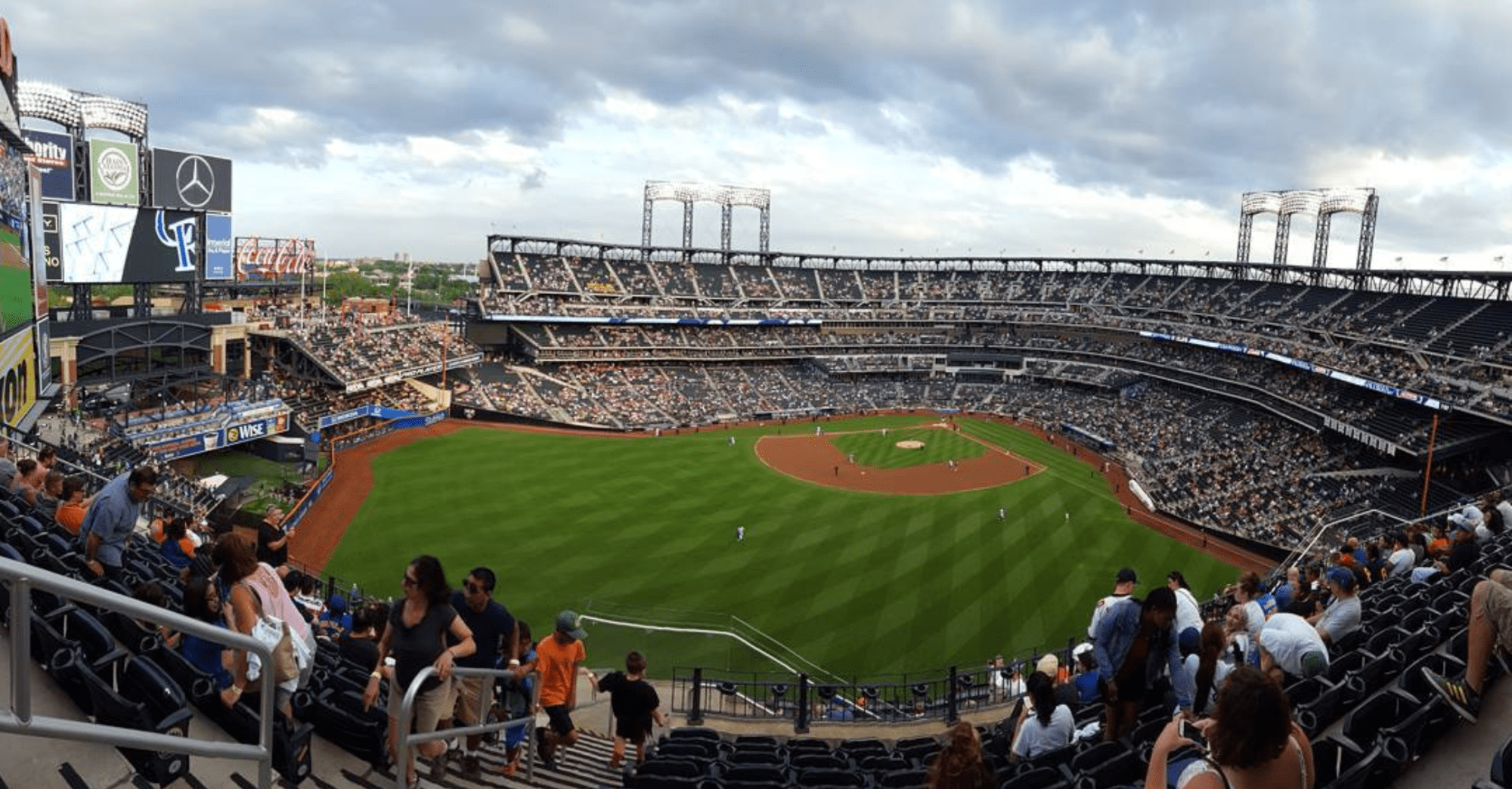
In a recent Gallup poll asking Americans what their favorite sport was to watch, it was determined that only 9% said baseball. This was the lowest number for baseball ever and placed it as the country’s third most preferred sport, behind basketball and football. However, in all people ages 18-34, soccer was almost double baseball at 6% and 11%, respectively. In addition, in all people ages 35-54, soccer was ahead as well 7% to 10%. The only age bracket listed in which baseball was ahead of soccer is people ages 55 and up at 14% to 1%. It should also be noted that baseball is #2 in the 55 and up age bracket beating out basketball 14% to 11%. This is just one poll, but the impact is clear, baseball is growing increasingly unpopular in the United States, especially amongst the younger generations.
As a casual baseball fan, I would agree with the results of this poll. Baseball has a slew of problems, of which fans are constantly debating how to fix. In this article, I want to discuss these problems with an anonymous former college baseball player and avid baseball fan. Let’s discuss:
As stated above, baseball is facing a major issue as it’s main fan base in this country is over 55 years old. America’s pastime lacks young fans in comparison to other sports, something that will obviously be critical in sustaining their share in the sports market. If they don’t find a way to make the game more watchable, baseball’s popularity in the country, especially in the younger age brackets, could continue to dive. As a casual fan like myself, I find it difficult to sit through an entire game on television. The sport is slow. Slower than it used to be for sure, as, according to baseball reference, the average time of a nine inning game for 2017 clocked in at 3 hours and 8 minutes, as opposed to 5 years earlier when it was 10 minutes faster and 10 years prior when it was 14 minutes faster per nine inning game. These numbers come on a relatively similar amount of pitches per game, 296 in 2017 and 293 in 2007 (both rounded to nearest whole number) according to baseball reference. So, in my opinion, the main problem is the time in between pitches. Just watch a game now compared to 10, 20 or 30 years ago. Pitchers step off the mound constantly, take long for signals, then a batter steps out of the box to adjust his gloves, then there’s 3 pickoff attempts in a row, sometimes it just feels like the pitchers take forever to get the catcher the ball. In my opinion, that’s the biggest problem facing baseball and perhaps the easiest fix. As someone who has played the game at the college level as well as a true baseball fan, how would you react to baseball implementing a 15 second pitch clock?
Excited to discuss this. As a baseball lifer and avid fan, I’m definitely in the camp that thinks the “baseball decline” is over-exaggerated. In fact, while people think of baseball as old and stodgy, the league is quietly on the forefront of digital innovation, and their early investment in streaming helped create the likes of HBO GO, Hulu and ESPN+. But I also can’t deny the ascension of the NBA and soccer (especially the MLS, which is seeing tons of success with our generation). I could veer well off course here, but I’ll start with your first question that surrounds two issues: length of games, and time between pitches.
For length of game, I think this issue is overblown. Over the course of 3 hours, the ten minute difference is not what is causing the issue. To me, a fan who is willing to invest nearly 3 hours in a game is likely not lost over a +/- of 10 minutes. I do think that 2 hours is the ideal length for a sporting event, and is a great part of what makes soccer so great is that you know exactly when the game will end. You can easily plan around 2 hours of your evening or weekend to watch a game. But since that’s not feasible, I don’t think trying to cut out 5-10 minutes is the right approach. Case in point: what are the two best baseball games from the last 2 years? Undoubtedly, it’s game 7 of the 2016 World Series where the Cubs ended their historic drought, and Game 5 of the 2017 World Series where the Astros won an incredible slugfest 13-12. The length of these games from first pitch to the final out? 4 hours and 26 minutes for the Cubs, and FIVE hours and 17 minutes for the Astros. Rather, I think the key issue with length of baseball games is that they occur every night for almost six months. It’s just too much baseball for the average fan.
So this brings me to pitch clock. I am far less concerned with the time it takes a pitcher to deliver the ball to the plate, especially with runners on base. I am surely biased, but I think one of the most exciting plays in the sport is the stolen base; handicapping the pitcher with an arbitrary time limit is definitely not fair. I could probably be convinced into a bases empty pitch clock, but I think a better course of action would be to force batters into the box quicker, and have an informal “pitch clock” if certain pitchers take too long to deliver the ball.
A few things you mentioned stick out to me. First, I should say, pretty much none of these potential improvements matter for the playoffs. Avid, casual and fringe fans alike will generally be more likely to watch if their team is in the playoffs or if there is a good story, such as the Cubs a couple years ago. Playoff baseball is distinctly different viewing experience, the games are more intense, every pitch seems to mean more to the players, the ballparks are jammed packed and there is genuine interest in these games.
Second, your point about the average fan not caring about ten minutes extra, well yes I would tend to agree with that point, but where I disagree with you is about how that extra ten minutes is being played. We already established that the total pitches thrown per game is essentially equal, therefore meaning the extra time is pitchers taking forever to throw the ball, or hitters dilly dallying into the box. If you add ten minutes of action, no problem, you add ten minutes of boredom, problem.
One point you mentioned that I would be all for is shortening the season. 162 games is far too long for any sport. It would certainly add a little more excitement to each game if there were some fewer amount, but it also seems like baseball would never do this because it would alter their almighty record books. I want to know from you, if you could shorten a season, what would your ideal amount of games be? Would the season be the same amount of time just extra off days? Would we start in May? What about shortening games, 7 innings instead of 9? What would be some potential negative impacts of shortening seasons and games?
I disagree with the idea of “10 minutes of boredom.” The 10 minutes stems as much from pitching changes as anything. And the lack of action is highly correlated to that as well. While in the 90s and early 2000s we saw lots of pitchers who could throw in the 90s, it was pretty rare to see it for all nine innings. With how many amazing, hard throwing relievers there are in baseball, we are seeing more pitching changes which equals more delays, and more strikeouts as hitters face premium quality pitching more frequently day in and day out than ever before.
I struggle with knowing what the right number of games would be for a season. For one thing, it definitely hurts the history of baseball. In a sport obsessed with numbers from career marks like the 3,000 hit club or 300 win club to single season marks like the handful of players who have joined the 60 homerun club, cutting out games reduces the likelihood of this happening. This also likely won’t happen anytime soon as a result of the massive TV contracts that the premier clubs like the Yankees, Red Sox, Cubs and Dodgers have: with that much money on the table over every single regular season game, teams and their business partners will be extremely reluctant to leave money on the table. I also don’t know if 7 innings is a good solution. Yes, it would shorten the games by 30-40 minutes, but it also might kill offenses. If starters only need to go 4 or 5 innings before turning it over to relievers, we’d likely see more strikeouts and even fewer balls in play that we’re already seeing.
Now, let’s pretend none of that existed. I think in a perfect world, Baseball is a spring/summer sport that wraps up with a fall classic. I think a regular season of May through mid September with playoffs wrapping up my mid October would be awesome. Baseball is also very much a rhythm sport, so I think you need to play 5 games a week. So five games a week from May 1-September 15 (20ish weeks) gets us to about 100 games. The answer may also be in shortening the regular season in favor of expanded postseasons. In spite of how long the NBA and NHL playoffs drag out (2 months), there doesn’t seem to be too much of an issue. So to expand on this 100 regular season game idea, I’d suggest the league expand to a 32 team league where 16 teams make the playoffs. Fewer meaningless games, still tons of TV money to be had, and a longer post season.
For the record, I would file extra pitching changes under “boredom” but let’s get off that for a moment. I like the idea of expanding the playoff field, that would certainly add more value to games throughout the year. I also agree that baseball will probably never change amount of games due to their holy records and the money issue for the players would make it potentially a non starter, but at some point they do have to accept they have a problem. Their mound visit rule this year is a joke, too many bylaws to that one and it has not shortened or sped up games. One interesting idea I heard was telling the umps to call the real strike zone. Some believe it has gotten to small and tight, therefore leading towards more walks and hitters leaning off pitches. More walks, more pitches, more batters, etc… If they broadened the zone a bit, or as it was originally intended there would be more balls hit in play, or more strikeouts. What do you think about this? Also, is there anything else, maybe outside the box you would propose or be interested in seeing baseball implement?
I don’t like the idea of expanding the strike zone in an era where there are already more strikeouts than ever. And I like the idea behind the mound limit rule, but I have yet to see anything on whether or not its making a true impact.
Here are a few random ideas that I don’t even know if I like, but if we’re trying to make more excitement and action while shaving off time off of games, they could work:
- Why the hell are bullpens still in the outfield? If pitcher’s just warmed up underneath the dugouts it could literally save 10 minutes per game. Waiting for a pitcher to jog 30-45 seconds all the way in from behind the outfield wall is just dumb, every team has space in their locker rooms for a mound.
- Shorten/move back the mound. It’s not unprecedented in baseball; in 1968 when no one could score, the league shortened the mound to make it easier for pitchers to make contact. I’d personally be against this one, but it would definitely lead to more balls in play
- Crazy rule that I think would be nonsense but I’d love to hear a talking head on ESPN go in on: a homerun “limit” – say each team can only hit 3 homeruns a game. If you hit a 4th home run, the batter is out and runners do not get to advance. Force players to try and hit for contact and lead to less boom or bust swings. This is a common rule on the pro slowpitch softball circuit, and I think it makes no sense for Major League Baseball, but I would also love to see people get all riled up over a discussion about it.
All interesting ideas there for the readers to think about. Overall, baseball is not going anywhere anytime soon, the sport will never die. It has been embedded in our country’s history since the 1800’s. However, finding a way to make the games more appealing towards younger fans, as well as casual fans has to be at the top of their priority list. Average attendance is down again and if the MLB and it’s players don’t make a concession or compromise, they can risk more attendance and popularity problems.
By Peter Gumas and Anonymous
 1204 Sports